
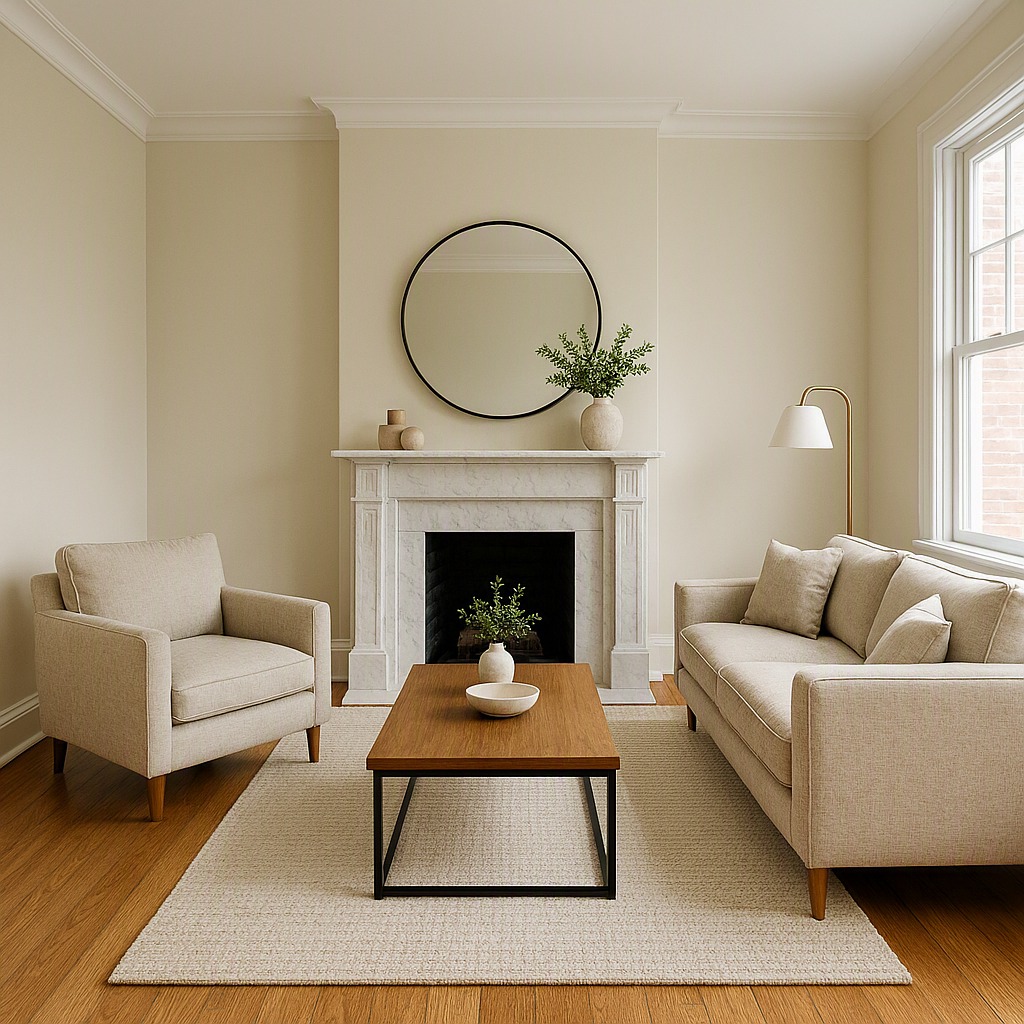
Above: Generated in AI using prompts and a photo of client’s empty living room
With so many variables influencing your property sale it’s easy to feel a loss of control. Thankfully, there are things you can do to give your home the best chance of a strong sale. Staging plays a invaluable role in capturing potential buyers’ interest, with staged homes selling an average 75% quicker than non-staged homes. Armed with this information the question is, do you choose virtual or phyiscal staging for your empty property?
The biggest difference of course between virtual home staging and real home staging is how the house presents for those all important viewings. While virtual staging generates eye catching online photos, traditional staging brings the in-person experience to life..
Virtual staging is gaining traction, so let’s delve into the pros and cons of virtual staging and compare them to physical staging to see which could be the better option for your sale.
Virtual Staging
Advantages
One of the standout advantages of virtual staging is its affordability. Hiring a professional stager for physical staging can cost anywhere from £1,500 upwards, depending on the size of the property and the quality of the furnishings. Virtual staging on the other hand typically costs between £30 to £100 per image, making it a more economical choice.
Virtual staging images can be ready in a matter of days. This is a significant time saver compared to the logistics of moving furniture and accessories in and out of a property.
Disadvantages
The disadvantages of virtual staging is it can can leave buyers feeling sceptical about the property’s real potential. Viewing an empty property in person will always lack the tangible, emotional connection that physical staging creates, leading to potential emotional disconnect and lower offers.
Visually misrepresenting the property can lead to disappointment during viewings. UK law mandates you to use clear disclaimers if the images have been digitally enhanced and they should use accurate scale. Your potential buyer must not be given a false impression of the space – so be wary of cheap and cheerful virtual services that could mislead your buyers and land you in hot water.
Physical Staging
Advantages
There’s an undeniable emotional impact when a buyer walks into a beautifully staged home. The toughful human touches of your property stylist will add layers of warmth and texture and create an asprational lifestyle.
Physical staging allows buyers to experience the space in a tangible way, help the buyer visualise living in the space more effectively. Physical staging creates a warm and welcoming environment that virtual staging will struggle to replicate.
Disadvantages include the higher cost of hiring quality furniture kits and the time and access required to professionally stage and de-stage your property.
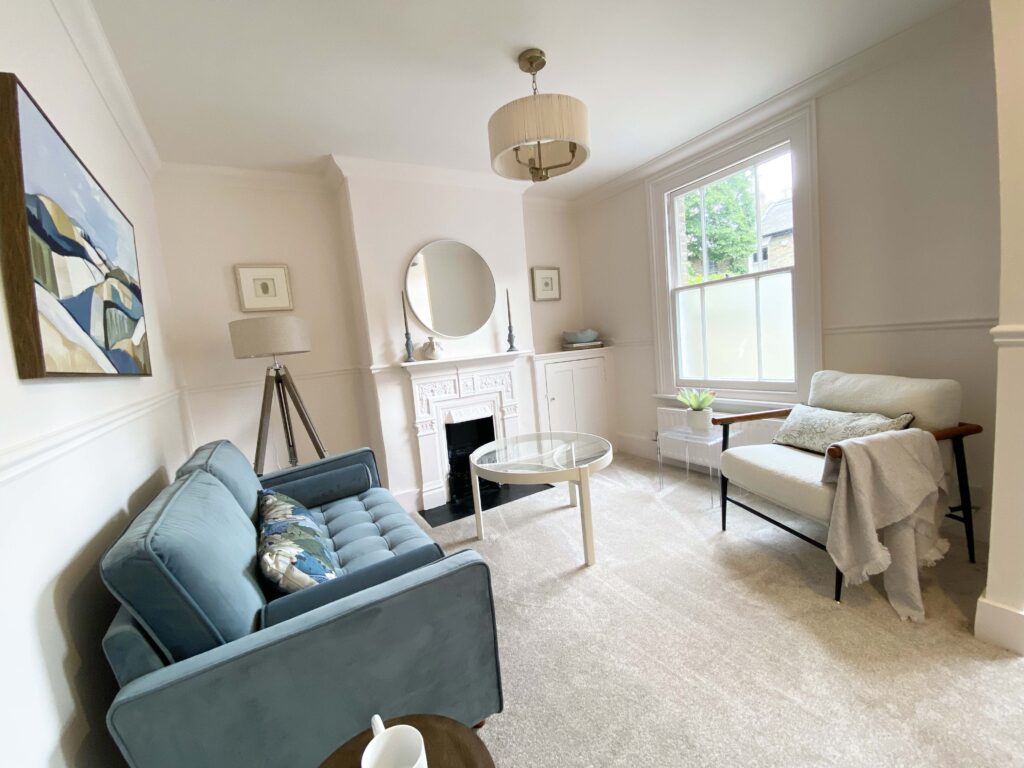
Above: Two bedroom cottage in Blackheath, London, staged by Annabel & Co
In conclusion, the advantages of virtual staging are cost-effectiveness, speed and convenience – but it does require careful attention to transparency and scale. Physical staging offers a realistic and emotionally engaging experience but comes with higher costs and logistical challenges. Ultimately, the choice between virtual and physical staging will depend on your budget and target market. Whichever you choose, professional staging can significantly enhance the appeal and saleability of your property.
About Annabel & Co Property Staging: We serve homeowners, developers and investors with professionally installed staging kits across the East Midlands, covering Cambridgeshire, Lincolnshire, North Lincolnshire, Nottinghamshire, Leicestershire, Rutland, South Yorkshire and East Riding. We also offer convenient remote online staging consultations, helping home owners prepare their property for a successful launch to market in just one weekend.
